
How to Choose a Filling System for Powder Products
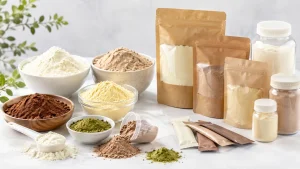
Choosing the right powder filling system is important for packaging accuracy, production speed, and stable machine operation. Different powders can behave very differently during filling, so the best solution should be selected according to the characteristics of the product rather than only the required filling weight.
Here are several key factors to consider when selecting a powder filling machine.
1. Understand the Flowability of the Powder
The first step is to determine whether the powder is free-flowing or non-free-flowing.
Free-flowing powders move easily through the hopper and filling mechanism. Some granular powders and coarse dry materials can often be handled by volumetric or weighing systems.
Fine or less-flowable powders may compact, bridge, or stick inside the hopper. For these materials, an auger filling system is commonly used because the rotating screw can control product discharge more consistently.
Understanding flowability helps determine which filling method can provide more stable dosing.
Compare the Dosing Method and Its Feedback
Ask how the machine meters material and how it checks the resulting fill. The feeding mechanism and the weighing arrangement are separate parts of the specification.
| Method or feature | What it controls or checks | Question for the trial |
|---|---|---|
| Auger dosing | A rotating screw meters powder from the hopper. | Which screw and settings suit this powder and the target dose? |
| Volumetric measurement | The system measures a set volume; the resulting mass depends on the material. | How is the fill checked when the powder condition or bulk density changes? |
| Weight measurement or feedback | A scale measures the dose or finished fill, according to the configuration. | Where is weighing performed, and does the result adjust filling or only check it? |
2. Consider Filling Accuracy
Required accuracy is another important factor.
For products that require consistent filling weights, the filling system must be able to control the amount discharged during every cycle.
An auger filler controls the filling volume through screw rotation and is widely used for fine powders. A weighing system measures the actual product weight and can be useful when weight accuracy is a priority.
The best choice depends on the powder characteristics, target weight, production speed, and acceptable filling tolerance.
3. Check the Required Filling Range
A machine designed for small-dose filling may not be suitable for large bags, while a high-capacity filling system may not perform efficiently with very small quantities.
Before choosing a machine, confirm:
- Minimum filling weight
- Maximum filling weight
- Required packaging speed
- Container or pouch size
These parameters help determine the appropriate hopper, auger size, weighing range, and feeding system.
4. Pay Attention to Dust Control
Fine powders can generate dust during feeding and filling.
Excessive dust may affect machine cleanliness, sealing quality, and the working environment. For dusty products, the filling system should be designed to reduce product drop height and control powder movement.
Depending on the application, dust collection, enclosed feeding systems, or suitable filling nozzles can also improve production stability.
5. Match the Filler to How the Pack Is Supplied
Decide whether the product goes into a container you already have, a premade pouch, or a sachet made from roll film. The three setups call for different package samples and checks.
- Existing bottle, jar or container. Use the QT-F2 auger filler as a dosing example. Send the actual container and check the outlet fit and headspace at the target weight. Specify how the filled container will be handled and closed.
- Premade pouch. The SPK-500 starts with a preformed pouch. Send empty pouches from the intended supplier, and check pouch opening, powder dosing and whether product reaches the seal area.
- Roll-film sachet. The QT-61XF makes the sachet as part of the packing cycle. Send the intended roll film and a finished-pack example or drawing. Confirm the powder dosing setup, film tracking and seal with your materials.
Record the individual filled weights and count finished packs that meet the agreed fill and seal checks. Measure accepted packs over the full trial, including normal loading and handling.
6. Consider Cleaning and Product Changeover
Factories that frequently change products should also consider how easy the filling system is to clean and adjust.
Removable contact parts, accessible hoppers, and simple auger replacement can reduce changeover time and make daily operation easier.
Confirm the Setup with Your Powder
There is no single filling system suitable for every powder product.
The right solution should be selected according to powder flowability, filling accuracy, filling range, dust level, packaging format, and production speed.
For fine or difficult-to-flow powders, an auger filling system is often a practical choice, while weighing or volumetric systems may be more suitable for other materials.
Testing the actual product before final machine selection is one of the most effective ways to confirm that the filling system can meet the required production conditions.
Example: Selecting an Auger Powder Filler
The QT-F2 auger powder filler is listed with a 5–5,000 g filling range, a 50-liter hopper and a speed of up to 50 fills per minute. These are the published specifications for that machine; the suitable screw, achievable speed and filling results depend on the powder, target weight and operating conditions.
For a complete package, also confirm how the filled container or bag will be handled and sealed. A filling machine and a complete bag-making or sealing line are different configurations.
What Should You Prepare for a Powder Filling Test?
- Provide a representative powder sample and describe its flow, particle size and dust characteristics.
- Specify the target fill weight, acceptable tolerance and required output.
- Share the container or pouch dimensions and the material used for packaging.
- Explain any cleaning, product-changeover and product-contact requirements.
For bag-based applications, see the comparison of premade pouch and VFFS packaging before selecting the surrounding packaging system.
Questions to Resolve in a Powder Filling Trial
What does an accuracy claim actually mean?
Define the target net weight, acceptable upper and lower limits, measurement method and sample count. Record individual fill results and the achieved production rate. An average alone does not show the spread of individual fills.
Does a powder blender also fill packages?
Mixing a batch and measuring a dose are different operations. The QT-300L powder blender is a mixing example; the downstream filler, package handling and closure must be specified separately.
Does an auger filler make the finished bag?
Not by the dosing function alone. Confirm how the bag or container arrives, receives the powder and is closed. Review the complete arrangement in the powder packaging equipment category.