
Tray Sealing vs Vacuum Packaging: Which Is Better for Food Packaging?
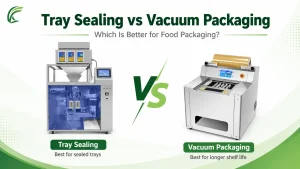
Short answer: Tray sealing describes closing a tray with a matching lid or film. Vacuum packaging describes removing air before the package is sealed. They are not always alternatives: some tray systems also offer vacuum or modified-atmosphere configurations. Confirm the actual equipment and intended pack.
Compare the Finished Package and Process
The comparison below considers a heat-sealed tray and a vacuum bag as two common project requirements. A tray alone does not establish vacuum or gas-flushing capability.
| Decision point | Heat-sealed tray | Vacuum bag |
|---|---|---|
| Package structure | A formed tray supports and presents the product. | A compatible bag contains the product during evacuation and sealing. |
| Items to match | Tray material, rim, mold and lidding film. | Filled bag dimensions, bag material, usable sealing length and machine space. |
| Product condition | Check fill level, tray rim cleanliness and the required lid. | Check the actual product during evacuation and the finished-pack shape. |
| Handling | Define filling, tray loading, sealing and unloading. | Define bag loading, evacuation, sealing and unloading. |
| Additional functions | Vacuum, gas flushing or skin packaging require a confirmed configuration. | Gas flushing or other process functions require a confirmed configuration. |
When Is a Tray-Sealing Setup Appropriate?
Start with a tray when the required pack needs a defined container shape, organized portions or a particular retail presentation. Send the actual tray and film together; matching their dimensions does not establish a compatible seal.
The TSM-10 food tray sealing machine is a listed heat-sealing example. Confirm the mold, loading method, finished closure and any requested vacuum or gas function for the quoted configuration.
Ready-Meal Tray Sealing Trial
Run the trial with the most difficult meal you expect to pack. A saucy portion, for example, can splash onto the rim during loading. Use the intended tray, lidding film and portion size for the test.
- Check the loaded tray. Place a filled tray in the tool. Check that it sits flat, the fill leaves room for the lid and the rim stays clear during the intended loading process.
- Inspect the finished seal. Check the full rim and all corners for wrinkles or gaps. Agree on a leak check and test how the lid opens if the pack needs a peelable seal.
- Count acceptable trays in a timed run. Include loading and unloading in the timing. Record the number of accepted packs and the defects seen, then confirm which parts of the workflow the quoted equipment includes.
If the pack specification calls for vacuum or a gas flush, ask the supplier to identify that equipment in the quotation and include the function in the trial.
When Should You Review a Vacuum-Bag Setup?
Review vacuum-bag equipment when the required process removes air before sealing a suitable bag. Check the complete filled package and the product’s behavior during evacuation, rather than selecting only by nominal seal-bar width.
Single-Chamber and Double-Chamber Layouts
The VP-400 catalogue photo shows one chamber in an upright cabinet with a hinged lid. The VP2-400 photo shows two chambers with a lid that moves between them. Neither model name gives the usable packing space. Put your filled bags in the quoted configuration and check where the bag openings sit on the seal bars. Time a complete cycle, including loading and unloading, with the intended operator workflow.
What Should the Sample Trial Confirm?
- The filled package fits the selected machine and handling arrangement.
- The tray-film or bag combination closes as required, using an agreed seal inspection method.
- The product and finished package retain the required appearance and form.
- The achieved output includes loading and unloading under the intended workflow.
- The quotation identifies included tooling, utilities and any additional equipment.
Common Buyer Questions
Does every tray sealer remove air?
No. Heat sealing, vacuum and gas flushing are different process functions. Specify the required process and verify the supplied configuration.
Can a machine name establish shelf life?
No. Confirm the required storage conditions and evaluate the actual product, package and process. A machine description is not evidence for a particular shelf-life result.
What information is needed for a quotation?
Provide the product, portion size, tray or filled-bag dimensions, packaging materials, required closure or atmosphere, target output and available utilities. Include samples or clear photographs of the intended finished pack.
For other package formats, use the packaging-machine selection guide or browse solid-product packaging equipment.